
EN
PRP hair treatment in Barcelona
PRP works, but only when applied to the right patient at the right time. Every consultation begins with trichoscopic diagnosis, not with injection.
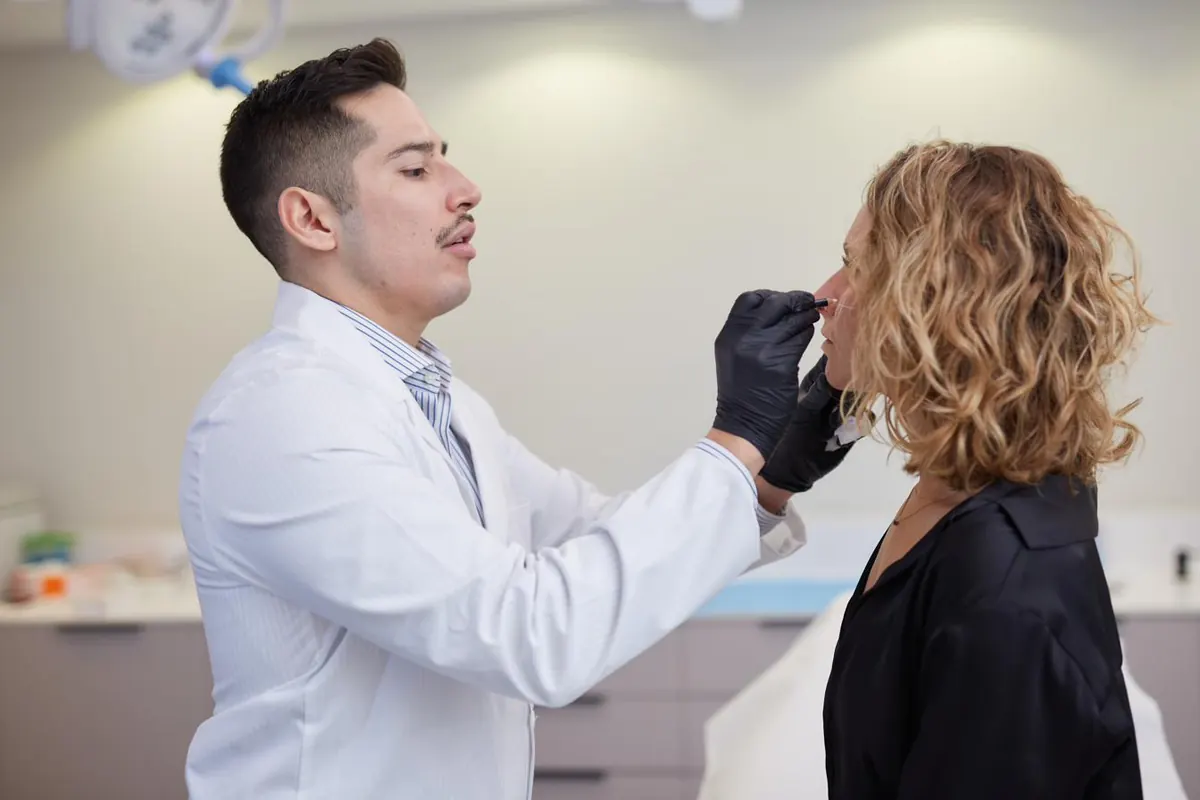
What it is and when it makes sense
PRP (Platelet-Rich Plasma) is a concentrate of platelets obtained from your own blood. Platelets release growth factors that stimulate the hair follicle, improve scalp vascularisation, and prolong the growth phase.
It makes sense in early or intermediate androgenetic alopecia (Norwood 1–4 in men, Ludwig I–II in women), chronic telogen effluvium, after a hair transplant and in patients with hair weakening without a clear identified cause. It does not make sense in advanced alopecia where the follicle no longer exists, nor as replacement for reference medical treatment.
My approach
Before proposing PRP I do a trichoscopy: I analyse density, hair diameter, follicular miniaturisation and scalp condition. Sometimes what looks like "hair loss" is something else — seborrheic dermatitis, hair stress, nutritional deficit.
I work with double-spin PRP systems with sterile closure, ensuring consistent platelet concentration. In many cases I combine PRP with hair mesotherapy or exosomes. PRP alone has a ceiling; combined it surpasses it.
What the process looks like
The first visit includes trichoscopy and assessment: I show you what I see, what expectation is realistic and what plan makes sense.
Each session lasts about 45 minutes: blood draw, processing, scalp injection with very fine needle or mesotherapy gun. Standard protocol is 3 sessions spaced every 4 weeks, with maintenance every 4–6 months.
What to expect
First change is usually a reduction in hair fall, perceived from the 2nd–3rd session. Improvement in density and hair thickness is more gradual: visible from the 3rd–4th month.
PRP does not create new follicles: it activates weakened ones and keeps them in growth phase longer. In patients with realistic expectation, PRP slows loss and improves density. In patients expecting to recover their 20-year-old hair, the technique disappoints.
When I DO NOT recommend PRP hair treatment
In advanced alopecia (Norwood 6–7) where the follicle has disappeared. Here the correct treatment is hair transplant; PRP can accompany post-op but does not replace surgery.
In active scarring alopecias (lichen planopilaris, frontal fibrosing alopecia): they need specific dermatological control. As an excuse to avoid indicated medical treatment: in patients with clear indication of minoxidil or finasteride, those are the base; PRP is complementary.
Frequently asked questions
How many PRP hair sessions are needed?
Standard protocol is 3 sessions spaced every 4 weeks, with maintenance every 4–6 months. Results stabilise after the second or third annual cycle.
How many months until PRP hair results appear?
Hair fall reduction is perceived from the 2nd–3rd session. Improvement in density and thickness appears gradually from the 3rd–4th month.
Does PRP grow new hair where there is none?
No. PRP activates weakened follicles and keeps them growing longer, but does not create new follicles where they have disappeared. In fully bald areas, the indication is hair transplant.
Does PRP replace minoxidil or finasteride?
No. In patients with clear indication for medical treatment, minoxidil and finasteride are the base. PRP is complementary and enhances the result, not a substitute for medication.
Hair medicine
Comprehensive medical approach to hair health. Diagnosis and treatment for weakening and hair loss.
Regenerative medicine
Regeneration of the dermal structure, working the skin from within, across several levels.
Polynucleotides
Cellular regeneration and improved skin elasticity via purified DNA fragments.
Every treatment begins with a good decision.
Book your medical assessment and we will discuss together whether this treatment makes sense for you — or whether another option is a better fit for your case.